
Home Alone 2 Walkthrought
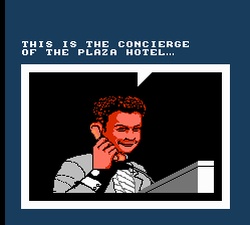
Step by step—no fluff, just what works. Home Alone 2: Lost in New York on the NES opens in the hotel, and the trick is not to panic. Stick to the long hallways and watch the doors: “Service” usually hides useful items, while blank doors can be traps that throw Kevin back. In Home Alone II your first troublemakers are janitors with vacuums and bellhops with carts: don’t charge head‑on—wait for them to blitz past, then slip through right after. Elevators are your main compass. Use the outer shafts: the right lift reliably sends you to the upper floors, the left to staff areas with bonuses. In the hotel corridors the Wet Bandits pop in fast—at the first glimpse of Harry or Marv, turn, peel off on a diagonal, then circle back. That’s the safest “Home Alone 2 NES walkthrough” approach for stage one: don’t play hero and don’t peek into every door just because it’s there.
The Plaza Hotel: corridors, kitchen, laundry, and the way out
First, make it to the kitchen: a row of labeled doors leads there, and the one you want usually comes after a patterned “alarm” rug that stands out. Inside, it’s easy to slide on trash, so jump early when you catch a glint on the floor. From the kitchen, head into the laundry. Line Kevin up so rollers and baskets pass just over his head; don’t land on the edge of moving platforms or they’ll toss you back. Look near the far end for a door with a light frame: it leads to a narrow hallway and a stair up. The stairs drop you on another residential floor where you’ll hear that signature vacuum hiss. Plot your route along the right-hand wall; it makes slipping past rooms with carts easier. The final bit is a lobby with a broad carpet. Don’t hesitate, don’t sightsee—sprint straight to the double doors to pop outside and close out the “Plaza Hotel walkthrough” with minimal stress.
New York streets: storefronts, fire escapes, and steam
Outside, the scenery shifts: shop windows, scaffolding, and fire escapes. To avoid chip damage, hop every steam burst from the manholes—the pattern cycles in waves: two short puffs, one long. You’ll see open entryways—skip them; they’re usually dead ends. The clean route is along scaffolds and beams. Climb the first fire escape, head right on the wooden framework, and jump the gaps between sections. Flowerpots sometimes drop from ledges—an audio cue gives you a beat of warning, so sidestep half a step. Marv loves to lurk in gaps between scaffold spans: don’t climb down to meet him, clear the opening from the upper tier. At the end of the street you’ll hit the park’s iron gates; look just left for a slightly ajar side gate—that’s your turn. For anyone searching “how to beat the streets in Home Alone 2: Lost in New York,” the golden rule is simple: stay high, and it’s smooth sailing.
Central Park: slick paths and short arcs
The park is quieter, but full of petty gotchas. Paths are slick—move in short arcs and use small hops to straighten out before bridges. Pigeons and dogs clutter narrow walks: lure them toward a bench, wait them out, then squeeze through. On larger peninsulas by the water, check gazebos—there are handy items that make the endgame much friendlier. Harry likes to pin you on bridges: enter with a bit of speed and don’t stop in the middle, or your turnaround will be painfully slow. The exit sits by a tight pair of lampposts; a path between them bends left. People often search this as the “Central Park level”—memorize the twin lampposts and navigation gets way easier in New York at night.
Upper West Side townhouse: attic, basement, and a showdown with the Wet Bandits
Next up is your uncle’s townhouse—this is where “Kevin vs. the Wet Bandits” really opens up. Don’t bolt upstairs from the doorstep; sweep the first floor first to set up a safe climb. Boarded windows mark spots where you can duck a straight rush from Harry. The basement entrance is through the kitchen: look for a door to the left of the big sink. In the basement, don’t trigger every hazard at once—leave a few “surprises” for the return trip when Marv is on your tail. When you climb to the second floor, favor the doors on the right—one leads to the attic. Up there the beams are narrow, so hop rafter to rafter on a diagonal, and don’t try to brute‑force a straight line. The final stretch is a long hall with gray wallpaper: head right, dragging your pursuers through traps, and get ready for the decisive encounter.
Harry and Marv: survival tactics and tight windows
There aren’t traditional bosses here—the Wet Bandits just keep coming. The game plan is the same across all of Home Alone II: keep your distance, bait them through “danger zones,” then push forward. On the streets, that’s the steam bursts; in the park, narrow bridges; in the house, stairwells and the basement. If they corner you, don’t panic: slip into the adjacent short screen, flip the area, and they’ll reenter farther away. For “how to shake the Wet Bandits,” that’s the most reliable, low‑risk play.
Passwords and tracking progress
After major sections the game shows a password screen—write it cleanly; it’s a lifesaver on a long retro run with no continues. Missed it? No worries—the next one pops after the next big scene. For queries like “where to find Home Alone 2 passwords,” the answer’s simple: watch for the New York map screen—that’s where the symbols are.
Toward the finale, the tempo climbs, but the rules don’t change: calm routing, room knowledge, and dragging Harry and Marv into the hurt. Once the hotel and streets run feel automatic, the townhouse clicks—and the “final fight” turns into a tidy victory lap more than a slugfest. And if you want a refresher on why we love “Home Alone 2 on NES,” hit /history/ and /gameplay/—we’ve bottled the vibe and fundamentals so your playthrough is a smooth, satisfying jog across NYC.